Jacques Marie Mage (JMM) proudly introduces its first gallery in New York City, located at 140 Wooster Street in the historic SoHo neighborhood of lower Manhattan.
Jacques Marie Mage (JMM) proudly introduces its first gallery in New York City, located at 140 Wooster Street in the historic SoHo neighborhood of lower Manhattan.
Few cities have imagined the future with the intensity of New York at the turn of the 20th century. It was an era defined by soaring towers, industrial ambition, electric illumination, and a distinctly American faith in progress from which the modern metropolis emerged. Yet this same period also gave rise to another defining national vision: the preservation of the wilderness. As New York ascended into modernity, America simultaneously turned its attention toward protecting its frontier landscapes through the creation of the national parks.
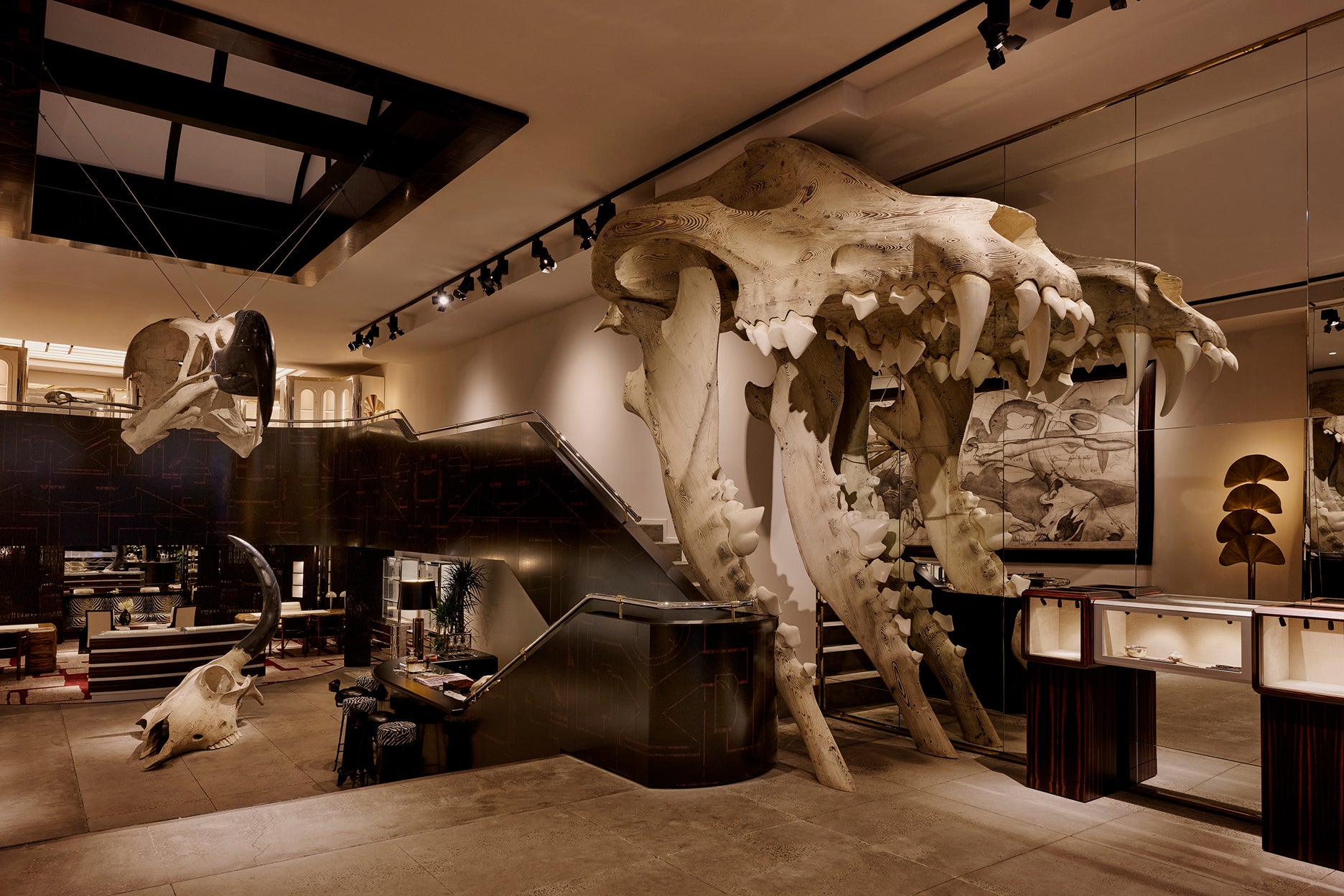
Located at 140 Wooster Street in the heart of SoHo, JMM’s Wooster-New York Gallery brings those two visions of America into close proximity, filtering the frontier through the techno-optimist sensibilities of early Manhattan modernism. Interiors, designed by French architect and designer Jacques Garcia, draw upon the visual confidence of Arts Décoratifs, incorporating dark lacquered woods, mirrored facades, antique armchairs, and curated display cabinets to recall the era’s vibrant social hubs, or the grand salons that incubated avant-garde culture.
“The New York gallery draws upon two defining American movements: the late-19th-century vision of New York City as a metropolis of the future, and the national park movement, born in the same era as an effort to protect the country’s wild landscapes,” says JMM founder and creative director Jérôme Mage. “So you have these parallel visions of urbanism and nature, progress and preservation, all under one roof and in this really interesting dialogue with each other.”
By the early 20th century, the frontier had already begun shifting from lived geography into curated national image. Rail companies promoted Yellowstone through luxury tourism campaigns, while natural history museums filled monumental halls with taxidermy and skeletal displays. The Wooster-New York gallery reframes the American wilderness through a distinctly exhibitionary lens. Collectors move through the space like observers of art and artifacts would, passing from densely furnished consultation rooms into towering installations that frame the American West as something carefully composed for view.
These themes find their most dramatic expression in the monumental sculptural works of French artist Quentin Garel, whose looming animal skulls invite a surreal anthropological presence into the gallery. The centerpiece of the gallery is a colossal wolf skull measuring more than four meters in height and weighing nearly half a ton. Functioning as both sculpture and ceremonial threshold, visitors ascend beneath it the way earlier generations might have passed through the entrance halls of a natural history museum or world’s fair pavilion, where scale itself was used to produce awe.
“In terms of design and décor, on one side you have Jacques Garcia—who, among many other things, is an expert in Art Deco and approaches everything from a historical point of view,” explains Mage. “And he’s created this absolutely stunning, modern Art Décoratif environment where Quentin Garel’s oversized animal skull sculptures take on a kind of nobility and fragility.
“They’re raw objects—bones, skeletons—but within that setting they start to feel almost precious, like adornments or mementos that speak to the wilderness, its vulnerability, and the idea of protecting it.”
The city and the wilderness were never simply places, but spectacles through which America learned to imagine itself. One built in steel, glass, and electricity; the other in sweeping vistas, towering peaks, and the promise of untouched land. Here, in the heart of SoHo, those parallel histories converge once more.

WRITTEN BY JMM
#ARTs