Military patches occupy a curious space between bureaucracy and folklore. Produced to identify units, commands, and assignments, they nevertheless developed a visual language all their own, one shaped as much by local embroiderers and tailor shops as by military regulations.
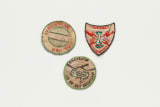
The three patches gathered here offer a glimpse into that world. A Chinook helicopter hovers above the challenge “What More Can We Do,” the unofficial poetry of a heavy-lift battalion tasked with moving men, machinery, and supplies wherever they were needed. Red lightning bolts streak across the map of Vietnam between American and South Vietnamese flags, transforming a naval communications command into something closer to a roadside emblem, while the spare Ranch Hand insignia references an aerial program whose legacy continues to shadow any discussion of the conflict.
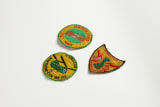
Rendered in olive green and mustard yellow, the patches preserve the peculiar language of Vietnam-era military life, where entire commands and operations were known by a handful of symbols, a stitched insignia, or a six-word slogan.
Vietnam war patches, c. 1960s–1970s
AVAILABLE IN
1 COLOR
150 USD
Military patches occupy a curious space between bureaucracy and folklore. Produced to identify units, commands, and assignments, they nevertheless developed a visual language all their own, one shaped as much by local embroiderers and tailor shops as by military regulations.
The three patches gathered here offer a glimpse into that world. A Chinook helicopter hovers above the challenge “What More Can We Do,” the unofficial poetry of a heavy-lift battalion tasked with moving men, machinery, and supplies wherever they were needed. Red lightning bolts streak across the map of Vietnam between American and South Vietnamese flags, transforming a naval communications command into something closer to a roadside emblem, while the spare Ranch Hand insignia references an aerial program whose legacy continues to shadow any discussion of the conflict.
Rendered in olive green and mustard yellow, the patches preserve the peculiar language of Vietnam-era military life, where entire commands and operations were known by a handful of symbols, a stitched insignia, or a six-word slogan.
Set of three Vietnam War-era embroidered patches, including insignia associated with the 228th Assault Support Helicopter Battalion, Commander Naval Forces Vietnam Communications, and Ranch Hand operations. Southeast Asia, c. 1960s–1970s.
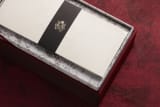
Each Reserve collectible is thoughtfully custom-packaged to Jacques Marie Mage standards, with tailored care to each artifact. Each collectible is accompanied by a JMM Certificate of Authenticity and ID card.