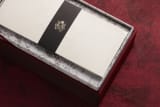
Night magazine, vol. 2#2, february 1979

400 USD

Published in February 1979, this issue of NIGHT Magazine continues Anton Perich’s ongoing documentation of New York’s late-1970s cultural landscape, expanding its scope beyond nightlife into fashion, art, and music.

The issue features a four-page spread by influential fashion illustrator Antonio Lopez, alongside interviews with Lopez, Neke Carson, Colette, and Johnny Thunders, figures representing a cross-section of the era’s creative scene.

Produced by Perich as publisher, editor, and lead photographer, NIGHT maintains its emphasis on visual content and format. Inspired by Warhol’s Interview but more singular in execution, the publication utilizes oversized pages and high-quality white stock, reinforcing its presence as both editorial platform and physical object.

As part of the magazine’s early run, this issue reflects the breadth of its subject matter, capturing a moment when fashion, music, and image culture operated in close and constant exchange.

NIGHT MAGAZINE, VOL. 2#2, FEBRUARY 1979

Night magazine, vol. 2#2, february 1979

400 USD

Published in February 1979, this issue of NIGHT Magazine continues Anton Perich’s ongoing documentation of New York’s late-1970s cultural landscape, expanding its scope beyond nightlife into fashion, art, and music.

The issue features a four-page spread by influential fashion illustrator Antonio Lopez, alongside interviews with Lopez, Neke Carson, Colette, and Johnny Thunders, figures representing a cross-section of the era’s creative scene.

Produced by Perich as publisher, editor, and lead photographer, NIGHT maintains its emphasis on visual content and format. Inspired by Warhol’s Interview but more singular in execution, the publication utilizes oversized pages and high-quality white stock, reinforcing its presence as both editorial platform and physical object.

As part of the magazine’s early run, this issue reflects the breadth of its subject matter, capturing a moment when fashion, music, and image culture operated in close and constant exchange.

NIGHT MAGAZINE, VOL. 2#2, FEBRUARY 1979
Volume 2 Issue #2 of Anton Perich’s NIGHT Magazine, February 1979, printed on unbound matte broadsheet, features a four-page spread by renowned fashion illustrator and style leader Antonio Lopez, and includes interviews with Antonio Lopez, Neke Carson, Colette and Johnny Thunders.
NIGHT MAGAZINE, VOL. 2#2, FEBRUARY 1979 NIGHT MAGAZINE, VOL. 2#2, FEBRUARY 1979 NIGHT MAGAZINE, VOL. 2#2, FEBRUARY 1979 NIGHT MAGAZINE, VOL. 2#2, FEBRUARY 1979

REMEMBERING STUDIO 54

Amid the madness of late-‘70s New York, a spark had emerged, soaring through the sky like a comet until it burned to dust. Studio 54, the most legendary nightclub ever known, was founded by college buddies Steve Rubell and Ian Schrager, who transformed a former midtown TV studio into a pleasure palace for the senses that took the Warholian ideal of celebrity to new heights, where everyone was a star in their own right.

Read More

THE SUPER SEVENTIES

If Origins marked a return to first principles, our second curated collection of archival gems turns toward a moment of pure release, an era when form gave way to feeling and spectacle became a way of life. With this second offering from Réserve, we step into the charged atmosphere of late-1970s New York, where the boundaries between nightlife, art, music, and cinema dissolved into a single, shimmering continuum.

At the center of it all stood Studio 54, the legendary nightclub that for a brief and incandescent period, became both sanctuary and stage: a place where identities were invented, hierarchies unraveled, and excess became a work of art. Beneath its velvet rope, a new mythology took shape defined by glamour and abandon, exclusivity and iconography.

The Super Seventies draws from this fevered convergence, assembling a tightly edited offering of rare spectacles that embody the era’s sense of elegance, irreverence, and provocation. These are objects shaped by a cultural moment where disco met downtown, fashion became performance, and the night offered myriad ways of escape.

Anchored by styles that channel the personalities and provocations of Studio 54 and its orbit—from Bianca Jagger’s commanding presence to the electric pulse of the dance floor itself—this collection captures a time when seeing and being seen were acts of equal consequence. Here, the archive does not simply remember, it revels…

Each Reserve collectible is thoughtfully custom-packaged to Jacques Marie Mage standards, with tailored care to each artifact. Each collectible is accompanied by a JMM Certificate of Authenticity and ID card.